AVAILABLE NOW


A Dark Heritage:
The Nighthunter
Logan Bartholom, Nighthunter to the Emperor, wakes with Ghost-induced amnesia in a manor in Little Beddin, Ossyan. All he has from his previous life is a magical sword and a talking dog from Hell. To find his true identity and discover what happened to him, he must go on a dangerous journey to a land where magecraft is still legal, in the company of a child with terrifying powers and his own would-be murderer… who is falling in love with him.
On the way to Thosea they discover a cult which sacrifices people’s souls to a Ghost masquerading as a god. Logan finds out he can travel through time and to different worlds. And they encounter many individuals and beings who are attracted by Cailte’s budding magical powers…
A Dark Heritage is a fantasy / horror novel set in a magical world where prehistoric animals coexist with humans and the Dead return as different species of Ghost.

Hansen Adcock is a writer of short SF stories and novels. His most recent book is A Dark Heritage: The Nighthunter, available from Golden Storyline Books

- The Stone Tape Theory and What is Inscribed on our Skulls
After hearing about the Stone Tape Theory from the Exploring with Fighters channel on YouTube, I did some delving into what it is and where the theory comes from, along with a theory about primal sound and how particles dance to music. Then I looked a little further inward; if the world can record old emotions, what old things might be recorded in our bones?

The Stone Tape Theory holds that memories of traumatic events and strong emotions are stored in the materials of the locations in which they occurred.
Materials like stone, wood, bricks, and especially quartz are thought by some people to hold onto this record of emotions / events, ready for the right conditions to trigger them into replaying.
This is the theory behind the idea of “residual hauntings” or non-intelligent ghosts or paranormal phenomena that keeps repeating itself in a certain place at particular times of the day or of the year, or when conditions are right. They’re also thought to be triggered in previously quiescent buildings undergoing renovation-work or other sudden physical alterations, due to those materials being broken and releasing whatever they absorbed in the past.
This is associated with other ideas like “place memory” and energy imprints. Overwhelming feelings such as pain, fear, or joy supposedly create energy imprints on certain substances.
Like an old videotape – which is magnetic – materials are thought to record things that happened in their environment. Perhaps this ties in to the phenomena of the correlation between high electromagnetic fields and subjective ghostly experiences.
The usual magnetic resonance of the Earth (or the Schumann resonances) is fairly low. Schumann resonances are natural electromagnetic waves released when lightning hits the Earth, which usually happens fifty times a second. The waves bounce between the ground and the ionosphere, travelling around the globe. Depending on the speed of light and the ionosphere’s conductivity, the primary Schumann resonance is about 7.83 Hz, with subsequent harmonics at roughly 14, 20, 26, 33, 39, and 45 Hz. These resonances not only impact climate monitoring but could also affect human brainwaves. There is ongoing research into how they affect our circadian rhythms.
The History
The Stone Tape Theory or “The Trace Hypothesis” gained a lot of popularity in the 1970s, but the ideas within it originated from much further back in time.
Humanity has almost always sensed that certain places harbour the past, either through some sort of spirit or a strange energy. The Ancient Egyptians thought that temples and tombs absorbed energy from the pharaohs and from rituals. Places devoted to gods like Osiris were viewed as being imbued with long-lasting power, the landscapes remembering religious events.
In the 8th century BC, the Greeks had similar beliefs around the Oracle of Delphi, a sacred place that allowed priestesses to communicate with the gods.
Somewhere around 500 BC, the ancient Celts thought that stone circles and burial mounds held memory-like qualities, linked to the spirits of their ancestors and important events. Examples include Newgrange and Stonehenge.
In 1837, Charles Babbage (a computer pioneer and mathematician who built the world’s first programmable mechanical computer) published “The Ninth Bridgewater Treatise.” It was a book about natural theology, and in it he posited that because of the transfer of motion between particles, sound waves created by human speech left a permanent, though inaudible, mark on the atmosphere. This meant the air itself could be a huge library of everything that had ever been said!
In 1842, Joseph Rhodes Buchanan came up with the idea of psychometry, or the ability to percieve things about the history of an object by just holding it or touching it. The belief was that objects held onto imprints from previous owners.
The Society for Psychical Research began in London in 1882, and investigators like Edmund Gurney and Eleanor Sidgwick looked at “place memory” as a possible explanation for hauntings of certain locations. In the SPR proceedings and in such books as Edmund Gurney, Frederic Myers, and Frank Podmore’s Phantasms of the Living (1886), they examined ghostly apparitions and possible non-spiritual causes for them. They suggested buildings and materials could record events that were then replayable by sensitive people.
The founder of the Society, Sir William Barrett, also proposed that emotional traces lingered in places.
H. H. Price, who was president of the SPR in 1939 and 1940 (and was a Welsh philosopher of perception) pursued the concept. In his works and lectures, he put forward the idea that the afterlife was a region of mental images in a “psychic ether” between the mental and material worlds. According to him, these mental images could break away from the mind that first thought of them and attach to a place (or an object) where sensitive minds could later experience the imagery as hallucination. If a haunting went away with the passage of time, that was because this psychic ether had worn down with repeated exposure. He argued that objects carried residues of emotions and that it might be proven by science (though nobody has proved any of this so far)!
In the 1950s and 60s, an archaeologist and parapsychologist known as T. C. Lethbridge took the theory further, stating in his book Ghost and Ghoul that non-interactive recordings were made in energy fields around natural things like mountains, streams, and forests. He did experiments at ancient sites using dowsing and a pendulum and detected what he called “emotional energy.”
Other tomes like Gog Magog: The Buried Gods in 1957 and Witches: Investigating an Ancient Religion in 1962 had a look at this idea.
In 1972, the BBC aired a horror drama titled The Stone Tape, about some researchers finding a haunting that was a “recording” in stone walls. Thus the term “Stone Tape Theory” became popularised, though it isn’t an accepted scientific theory.
After 1972, the theory was discussed by others such as Peter Underwood and Brian Righi, and Tom Perrott (chairman of the SPR in the 70s) conducted some studies of hauntings that fitted into the residual haunting / stone tape idea.
The Science
Scientists and critics of the Stone Tape Theory have found no geological basis for it or any rational scientific mechanism behind it.
A recent study involved a GIS analysis using spatial tools to look at supernatural events near quartz and limestone deposits.
Believers in the theory think that certain materials like limestone, quartz, or iron-infused rocks are very conductive to energy. In a way, they’re not wrong – quartz has piezoelectric qualities, able to produce electricity when put under a lot of mechanical stress, e.g. earthquakes. However, this is a different type of energy to emotional energy, and no empirical evidence exists of emotions being able to interact with piezoelectric qualities.
(Although, as a side note, neurological impulses are electrical, and neurology influences behaviour such as reflexes, and emotions are also controlled by neurology. I find this fascinating. However, the electrical impulses are contained within neurons, so how on earth could they escape into the environment?)
Conditions in which the “recorded” energy is believed to be triggered into replaying include changes in temperature and humidity, (like fog) specific times of day (e.g. dusk) or anniversaries of historical events, and the presence of a psychically sensitive person. However, there is no such thing as a device that can scientifically record emotional imprints, so the theory cannot really be tested.
Recordings need to be played on some type of device in order to be heard, and back when the Stone Tape Theory was first posited, recordings had to be rewound before they could be listened to again. Obviously, no explanation was put forward for how that could work.
Old Vases and Archaeoacoustics
Way back in 1902, Charles Sanders Pierce put forward the theory that ancient pottery could perhaps be played on a phonograph in the same way as a phonograph wax cylinder, and that playing the pottery could reveal accidental recordings from far-flung history, i.e. the sounds that were occurring in the potter’s environment whilst the pot was still a lump of wet clay being shaped on his wheel. Phonograph cylinders stored sound recordings as grooves engraved into the wax.
In the 1960s, Richard G. Woodbridge the III coined the term “Acoustic Archaeology” and made some early experiments in that area, making clay pots and oil paintings and trying to play sound from them. He used a record player cartridge attached to a pair of headphones, and claimed to be able to hear the hum of the potter’s wheel from the pot’s grooves and the word “blue” from a patch of blue colour in a painting.
As recently as 1993, archaeology professor Paul Astrom and acoustics professor Mendel Kleiner were able to extract sounds from pottery, but mostly in the upper frequencies. Seeing as the ancient potters didn’t have the technological means to deliberately record sounds into their artworks, the idea of actual voices and discernible sounds emerging from them hundreds of years later has been discredited.
However, this helped to give rise to the usage of acoustics in archaeology, either for studying ancient musical instruments or for ancient architectural structures / sites. Acoustic measurements and computer simulations can be used to suss out how old artefacts sound or recreate what a particular site would sound like if one were standing in it.
For example, it has been found that prehistoric cave paintings in France and northern Spain appear to have been positioned according to acoustic effects.
In 1999, Aaron Watson studied the acoustics of different sites including Stonehenge, some chamber tombs and other stone circles. In 2011, Steven Waller argued that Stonehenge was likely built according to a blueprint of acoustic interference patterns. In 2020, a detailed study was described in the Journal of Archaeological Science in which an acoustic scale model of Stonehenge was made to examine how speech and musical sounds were altered by its acoustics!
Archaeologist Paul Devereux studied “ringing rocks” and Avebury in his book Stone Age Soundtracks. Ringing rocks produce a metallic or bell-like sound when struck with a small “hammerstone.” See Paul Devereux’s Landscape and Perception project here: https://pauldevereux.co.uk/landscape-perception.html
Ian Cross of Cambridge University has studied “lithoacoustics” or musical instruments made out of stone.
Rock gongs in Sudan have also been studied.
A Related Note: The Chladni Plate Experiment
This involves a tone generator, a metal plate attached to a speaker, and particles of something like sand.
If you sprinkle the sand onto the metal plate and play a tone through the speaker, the sand dances and forms intricate geometrical patterns.
This is because specific frequencies cause the plate to vibrate in specific patterns, some regions vibrating in opposing directions so that some areas of the plate contain no vibration at all. (The areas of no vibration are “nodal lines.”) The sand grains fall into the nodal lines, creating different patterns in reponse to different sounds.
This video by brusspup on YouTube is a good demonstration. Water Reacts To Words?
In 1994, a Japanese doctor of alternative medicine named Dr Masaru Emoto began conducting strange experiments on the effects of language on… water molecules?
He realised that water shows us its “true nature” in frozen crystal form. He froze droplets of water and looked at them through a dark field microscope that had photographic capabilities.
In his experiments, he compared different types of water molecules to each other and observed how they reacted to different types of music and different words (he wrote words on pieces of paper and taped them to the bottles the water was in).
He found that water from mountain springs and streams had perfectly formed crystalline structures and that crystals from polluted or stagnant water were often distorted or deformed.
He also claimed to have found that when distilled water molecules were exposed to classical music, they took on intricate but symmetrical shapes. He then claimed that if the words “thank you” were taped to the bottle of distilled water, the crystals formed were similar to those formed after exposure to Bach’s “Goldberg Variations,” which were composed out of gratitude.
He said that water that was exposed to heavy metal music or labelled with negative words or thoughts, e.g. “Adolf Hitler,” didn’t form crystals but made chaotic structures instead.
He also said he found that water treated with aromatherapy oils formed crystals that often imitated the shape of the flower the oil was extracted from.
There has obviously been debate over the validity of this experiment and Dr Emoto’s methods – water molecules can temporarily change in response to vibrations from sound or music, but it doesn’t permanently change their basic structure. However, it has sparked more exploration into water’s energetic and relational qualities.
Feeling it in Our Bones?
Every human baby is born with their skull consisting of separate bony plates joined together by tough, flexible tissue, which allows their brain to expand as it grows. Over many years, the bony plates fuse together into an almost wholly solid skull, but the lines where the bony plates joined together remain throughout life – long, intricate wiggling lines in the skull known as “cranial sutures.” Forensics people use the extent of suture fusion to estimate the age range of bodies. Everyone’s cranial sutures are different, like fingerprints.
The poet Rainier Maria Rilke put forward the theory (in his short essay “Ur-Gerausch” or “Primal Sound”) that the cranial sutures on a skull could be played through a gramophone or phonograph if the needle was placed on a cranial suture instead of on the usual wax cylinder containing music. He noticed that, in the case of the zigzagging coronal suture of the skull, it resembled the audio track on a phonograph cylinder. He was aware of how the “seams” of the skull represented the passage between our inner and outer world, a passage that grows more and more rigid through the years until it ends up as a mere symbol, an engraved sign.
The essay can be found in its entirety here: https://archive.org/details/rilkeprimalsound/page/n5/mode/1up
Nerves also feed into the bones of our skeletons, both sympathetic nerves and parasympathetic nerves, not just alerting us to inflammation and injury but helping bones to grow and heal and remodel themselves in reponse to our environment.
Strong emotions can affect bones (though arguably, they affect every system in the body). According to both Traditional Chinese Medicine and Ayurveda, negative emotions such as fear and worry have the capacity to erode or weaken bones, increasing the likelihood of osteoporosis development.
As a thought-experiment, supposing that the Stone Tape Theory was true in some way, perhaps it isn’t just the stones of our environment that “record” strong emotions and traumatic events, but the “stone” inside our bodies as well – our bones. Perhaps one could even be affecting the other, and we just don’t know about it yet.
What do you folks think? Let me know in the comments!
Sources:
https://thehorrorcollection.com/what-is-the-stone-tape-theory/
https://the-line-up.com/stone-tape-theory
https://www.cambridgeskeptics.org.uk/post/the-stone-tape-theory
https://my.clevelandclinic.org/health/body/skull-sutures
https://scienceinsights.org/what-is-the-coronal-suture-structure-and-function/
https://en.wikipedia.org/wiki/Archaeoacoustics
https://archive.org/details/rilkeprimalsound/page/n5/mode/1up
- The Voices of Joan of Arc
A young French girl claimed to hear messages from God and angels telling her to lead her country to victory over the English. But where did these voices originate from?
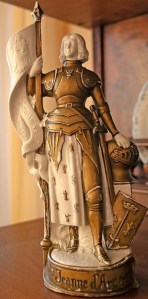
image from Pignatta (pixabay.com) Joan of Arc, widely known as the French peasant girl who heard God and the voices of angels and saints beseeching her to lead the defenders of Orleans against the English soldiers besieging the city, played a part in helping France win the war against the English invaders… but unfortunately, she never lived to see that ultimate victory.
She came from Domremy village in north-eastern France, on the borders of Lorraine and Champagne, born on January the 6th, 1412 to Isabelle Romee and Jacques d’Arc. Jacques was a farmer and a minor local official.
At that time, not only was France at war with England but the country was divided against itself, with many nobles in north and east France supporting the English claim to the throne and others staying loyal to the idea of a French king. In spite of being surrounded by pro-English landowners, Joan and her family were on the side of the French crown.
For years beforehand, there had been prophecies circulating that a woman would make France desolate and that a maiden in armour from Lorraine would save it. The woman was Queen Isabella, who allied herself with the English.
Joan’s early life is made murky by the distance of time and modern historians are not certain what her real name was. She claimed to be called Jehanne la Pucelle, but also said she didn’t know her true surname. Some historians believe she was actually named Jehanne Tarc or Jehanne de Vouthon.
The story of her birth and upbringing has been called into question, as Joan of Arc somehow learned to ride warhorses and use a sword, when peasant girls of that era would have been indoors having to do domestic tasks such as weaving and spinning, and caring for domestic animals. However there is other evidence that she was most likely from a peasant family, such as her being illiterate.
It wasn’t until she turned 13, in 1425, that Joan began to hear voices, usually when alone in the woods or sitting in church. She also had visions which she believed were sent to her by God. Saints and angels apparently told her to live a strictly religious life and attend church. Sometimes, even the bells in the steeple seemed to be speaking to her.
Her visions consisted of seeing St Margaret, St Michael, and St Catherine along with bright lights and the sounds of bells. The first voice she heard was that of St Michael, whom she said would return to her over and over when she was alone in the fields. The saints and angels asked her to save France from the English and help put Charles VII, the rightful French king, on the throne.
When Joan was 16 years old, she asked her uncle (Durand Lassois / Laxart) to take her to Vaucouleurs so she could ask the garrison commander (Count Robert de Baudricourt) for permission to enter the court at Chinon to the south-west of Paris. Knowing her father wouldn’t let her go or understand about the voices or visions, she got Durand to ask her parents to allow her to go to Vaucouleurs to take care of her sick aunt, and Durand came to fetch her.
After she told Baudricourt about her visions, the man at first said “Box her ears and send her home to her mother,” but on February the 12th 1429, when Joan told him the French had been beaten by the English at the Battle of Herrings (two days before the news arrived from the battlefield, which was hundreds of miles away), Baudricourt agreed and gave her an escort of two knights to Chinon. They were Sir Jean de Metz and Sir Bertrand Poulengey, and they both came to believe in her quest. During the journey Joan disguised herself as a man and travelled through Burgundian territory.
Joan was given a private audience with Charles VII, because she impressed him. Charles had ordered a subtle inquiry into her claims and to make sure she was loyal and genuine, and when she arrived in court, Charles gave her a test.
The would-be King swapped places with one of his court-members and put on plain clothes before Joan walked in. He maintained that if Joan were really sent by God, she would be able to spot him standing in the crowd.
Joan of Arc entered the court and saw through the King’s ruse, directly approaching him instead of the man on the throne. She addressed him as the dauphin. He insisted she had got it wrong to begin with, but she stood firm and didn’t back down. She told Charles what he had said to God during his private prayers, which further impressed him. He accepted her as a devout Christian and a loyal subject.
Charles VII’s mother in law, Yolande of Aragon, was helping to prepare an expedition to the besieged city of Orleans. Joan asked for permission to bear the weapons and armour of a knight and travel with the army headed there. As Joan had no money, she relied on people’s donations for horses, swords, armour, banner, and entourage. According to Margaret Nicholas, Joan wore white armour with a scarlet and white surcoat, with a sword in a red scabbard by her side. The sword had once belonged to Charles Martel, who stopped Muslims invading France in the 8th century. It had been hidden somewhere for hundreds of years, but Joan’s voices guided her to ask for the old sword marked with five crosses which was buried at Fierbois in the church of St Catherine. The clergy in the church didn’t know what she was talking about, but she insisted it was buried behind the altar. They dug behind the altar, and there the sword was.
Joan also rode out of Chinon on a white charger with a white banner painted with a fleurs-de-lys.
The earlier prophecies made Joan popular in the city and an inspiration to its defenders. She was given command of 6000 men at Blous and arrived at the siege of Orleans on April the 29th, 1429, still aged sixteen, but was quickly excluded from the war councils by the leader of the French defence, Jean d’Orleans.
Joan was tenacious. She would burst into meetings, arguing and criticising decsions made by the senior commanders who were there. She got the population of the town involved at times, turning the siege into a religious war with God on the French side. She walked amongst the locals daily giving them food and other supplies, as well as encouragement.
Some historians maintain that Joan was only a standard-bearer in the army. Other historians maintain she was a great strategist and a skillful tactician.
Within nine days of her arrival, the siege of Orleans ended.
After that, Joan led the French counterattack against the English, which ultimately would help Charles VII gain the crown. The city of Rheims was occupied by the Burgundian allies of the English. Despite scepticism from the commanders, Joan planned to simply march into Rheims and take back the land, relying on God to protect her.
Joan’s victory at Orleans brought the army quite a few new recruits from different parts of the country. In the end she was successful in convincing the commanders to accept her suggestions for the taking of Rheims.
The French had become so good at retaking their land by this stage (with other victories at towns such as Patay), the Burgundians surrendered the city of Rheims, not even offering any opposition when Joan and the army opened its gates. Charles VII was crowned King of France in Rheims cathedral in July 1429, with Joan by his side.
The medieval French writer Christine de Pizan composed The Tale of Joan of Arc shortly following these events, and Joan was seen as a hero. Only Paris remained to be recaptured to ensure a French victory.
However, the assault on Paris didn’t go to plan, Joan was injured, and a ceasefire was arranged. During the temporary peace the Burgundians captured Joan of Arc in 1430 and sold her to the English! King Charles VII didn’t help her.
She was imprisoned in the English-controlled city of Rouen, and was put on trial for heresy and witchcraft. She was supposed to have been placed in an ecclesiastical prison guarded by women, but instead she was put in a normal prison where she was threatened and harrassed by male guards.
Many religious leaders refused to go to Joan’s trial until the English threatened them. The English were determined to convict her for heresy; several theological traps were laid during her interrogation, for example she was asked whether she was “in God’s grace.” If she answered yes to that question, she would be deemed a heretic, but if she said no, that would be the same as saying her visions had been false. Instead, she replied:
“If I am not, may God put me there and, if I am, may God keep me there.”
Joan was put on trial for 70 charges, mostly of witchcraft and sorcery, but once the trial was half over the charges reduced to 12, all references to witchcraft gone apart from one.
Threatened with being burned at the stake, Joan eventually denied that she had been directed by God. Following this, more visions came to her, scolding her for lying to save her own life. She withdrew her denial, was found guilty of heresy and sentenced to death.
On May the 30th 1431, Joan of Arc was burned at the stake, holding a cross in her hands, made of two sticks and passed to her by an English soldier. She called upon the name of Jesus even as she was being burned. To make sure she was dead, they burned her twice, casting her ashes into the River Seine.
Twenty-five years later, the church formally exonerated Joan and she was beatified in 1894. In 1920, the Pope declared her a saint.
Modern doctors have put forward the view that Joan was suffering from some form of mental illness. The bells and lights that came with her visions are the sort of thing that happens during hallucinations. She could have been suffering from migraines, brain lesions, bipolar disorder or schizophrenia.
More in-depth information can be found here: https://www.jeanne-darc.info/
What do you think? Was Joan being guided by something beyond the veil – good or bad – or was she living with a mental difference and the rest was only coincidence? For example, how did she know which one was the true Charles VII when she entered the court at Chinon? Let me know in the comments!
Sources:
https://www.historicmysteries.com/history/joan-of-arc-divinely-inspired-mentally-ill/22010/
The World’s Greatest Psychics & Mystics by Margaret Nicholas
- The Versailles Incident
A supernatural journey through time by two Edwardian headmistresses
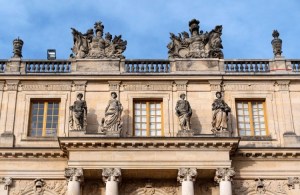
image by SLPix (pixabay.com)
Two women named Charlotte Anne Moberly and Eleanor Jourdain paid a visit to the Palace of Versailles in France in 1901. While they were looking around the palace grounds, they became lost and seemed to walk backwards through time.
Miss Moberly, born in 1846 (the tenth of fifteen children) was the daughter of the headmaster of Winchester College (who was also Bishop of Salisbury). When she grew up she became the head of a hall of residence for young women, St Hugh’s College, in Oxford. Miss Jourdain was asked to take on the role of her assistant.
Miss Jourdain, born in 1863, was the child of a reverend who was the vicar of Ashbourne in Derbyshire. The eldest of ten siblings, she was the sister to art historian Margaret Jourdain and the mathematician Philip Jourdain. She attended school in Manchester, despite most girls being educated at home during that era. Miss Jourdain also ran a school of her own in Watford and had written several textbooks.
Eleanor Jourdain had an apartment in Paris which she used to teach children English. Before she took on the role of vice-headmistress at Charlotte Moberly’s college, the two women decided to spend some time in the apartment in Paris to get better acquainted, though the main reason may have been because Charlotte wanted to visit the great International Exhibition.
They took a train to the Palace of Versailles in August 1901 and took a tour of the building. While walking in the gardens they missed the turning for the main avenue and wandered onto a lane that passed by the Petit Trianon (a small chateau they were trying to get to). Then strange things started to happen, almost imperceptibly at first.
An Incident in Time
It was August the 10th, 1901. After the palace tour, Misses Moberly and Jourdain decided to walk through the gardens to the Petit Trianon, a Neoclassical style chateau within the gardens of the Grande Trianon. The smaller chateau was built on the orders of Louis XV for his mistress, Madame de Pompadour.
When Louis XVI gained the throne aged 20, he gave the chateau and its surrounding grounds exclusively to his wife, Marie Antoinette.
The two headmistresses looked forward to seeing the gardens’ decorative bridges, waterfalls, pavilions, groves, and the “toy village” where Marie Antoinette would entertain herself pretending to be a peasant woman, a shepherd or a milkmaid in the farm cottages.
They reached the head of a long lake and turned right, through a woodland glade, until they found another stretch of water with the Grande Trianon reflected in it. They passed the body of water on the left and came to a wide green drive, completely empty of people. If they had followed it, they wouldn’t have gotten lost, but they crossed it into a lane instead.
Eleanor was slightly further ahead when Charlotte noticed a woman shaking a white cloth out of the window of a cottage on the corner of the lane. Later, she learned that Eleanor didn’t see the woman.
At that point, both the women weren’t aware of anything unusual going on. They talked about Oxford and mutual friends, moving up the lane and turning right past some buildings.
They came to a fork of three grass-covered paths and chose the central one, as there were two men up ahead from whom they proposed to ask for directions. Both women assumed the men were gardeners because there was a wheelbarrow and a pointed spade nearby, but both men were dressed a little oddly in long, grey-green coats and small, tricornered hats. The men directed Eleanor and Charlotte to keep going straight ahead, then resumed their deep conversation.
Eleanor then saw a detached cottage with a woman and a girl standing in its doorway. They were dressed oddly, too, with white kerchiefs tucked into bodices, and the woman was passing a jug to the girl, who wore an ankle-length skirt and a close-fitting, white cap. Charlotte didn’t see the girl or the woman with the jug.
It was at that point that both Charlotte and Eleanor began to get a creeping sense of surreality, but as they hadn’t known one another all that long, neither dared mention these feelings out loud.
Charlotte Moberly wrote later that “an extraordinary depression came over me, which in spite of every effort to shake it off, steadily deepened until it became quite overpowering.” Unknown to her, Eleanor Jourdain wrote that she “began to feel as if I were walking in (her) sleep; the heavy dreaminess was oppressive.”
They came to a grotto with something like a kiosk or small bandstand in it. Seated by it was a man in a heavy, dark cloak, his face shaded by a big hat. He turned his head suddenly and seemed to look at them, revealing a pockmarked face with a dark and menacing expression. Eleanor felt that he was uncanny and fear-inspiring, and both she and Charlotte had a moment of alarm.
The grotto was so enclosed they couldn’t see anything beyond it. Things took on an unnatural aspect, and not a pleasant one! Even the trees behind the bandstand became flat and lifeless, like a wood depicted on a tapestry, with no light or shade, no hint of a breeze, everything weirdly still.
Footsteps ran up the path behind the two women but when they turned around, nobody was there. However, another person had appeared in the grotto – a handsome gentleman with black, curly hair who called to them in some excitement, “Mesdames, mesdames, il ne faut pas passer par la” and waved his arms before saying “Par ici… cherchez la maison,” indicating he wanted them to take the right-hand path, not the left, as that would take them to the house.
Charlotte and Eleanor moved to a small bridge on the right and turned to thank him, but the man had vanished. They heard someone running yet again, but saw nobody actually running.
Over the bridge, they were on higher ground until they came to a meadow looking onto the front of the Petit Trianon. They mounted a set of steps onto the terrace, and Charlotte caught sight of a lady sitting in the grass growing right up to the house, sketching. This solitary artist turned to look at the two women as they passed, and she was dressed in a light summer dress trimmed with a fichu folded across her shoulders, with a shady, straw hat on top of her puffed-out blonde hair. The young woman was pretty, but at the same time, Charlotte Moberly found her somehow unattractive, still feeling as if she was walking in a dream. Eleanor Jourdain didn’t see the sketching woman.
Misses Moberly and Jourdain walked around to the terrace’s west side, seeking an entrance, the oppressive stillness growing ever more intense. A door opened and a young man dashed out, slamming the door behind him, and ran to them, saying they mustn’t stay there. He offered to take the two ladies to the main entrance off the courtyard. He had a cheerful manner with a slightly mocking smile, and though he wasn’t in livery, they got the impression he could be a junior footman.
The man led Charlotte and Eleanor through a formal French garden walled with trees, into the courtyard, where they found the entrance hall.
Reality asserted itself once again – a guide arrived and invited the two women to join a group of tourists. On leaving, Charlotte and Eleanor took a carriage back to Versailles for tea, and everything was natural, the wind blowing once again.
Taking Stock
The visit wasn’t mentioned for a whole week. However, as Charlotte was writing a letter about her time in France, she began to wonder.
“Do you think the Petit Trianon is haunted?” she asked Eleanor.
“Yes, I do,” her new friend conceded without hesitation.
They finally compared notes and discovered that they hadn’t always been seeing the same things at the same time while they were lost in the gardens.
Charlotte and Eleanor wrote a separate account of what each had experienced (without showing it to the other one) and undertook research of the Trianon’s history. They reckoned they may have seen events that took place on August the 10th 1792, six weeks before the French monarchy was abolished, the siege of the Tuileries, and the slaughter of the King’s guards.
Eleanor revisited the palace grounds again by herself in January 1902, and found that things had altered, the route she and Charlotte had walked now being untraceable. The bandstand and the bridge were missing, the place was swarming with (living) people, the gateway onto the wide green drive was derelict, the drive itself smothered by weeds, none of the three paths they’d had to choose from were there, there was no cottage where Eleanor saw the woman handing a jug to a child, no steps leading to the house-front, and the door through which the “footman” had rushed out was invisible because a wall stood in the way of it. Eleanor asked people she knew in Paris whether there were any ghost stories concerning the Petit Trianon.
They told her that Marie Antoinette’s ghost had been seen in the gardens wearing a light summer hat and a pink dress.
Some people in Versailles village said that the ghosts of the entire court appeared on the anniversary of the siege of the Tuileries on August the 10th, 1792 – the day that led to Marie Antoinette dying via the guillotine.
Through more research, the two women decided that the pockmark-faced man they had seen was the Comte de Vaudreuil, who was a friend of Marie Antoinette’s.
Eventually, Charlotte and Eleanor published a book about their experience titled “An Adventure” in 1911, under the pen-names Elizabeth Morison and Frances Lamont. The book, along with its claim that Marie Antoinette had appeared in the palace gardens in 1901, caused quite a ruckus and a lot of divided opinions.
The true identities of the book’s authors weren’t revealed until 1931.
Can It Be Explained?
It may have been that the two headmistresses had stumbled into an eccentric sort of LARPing party and not realised.
According to Philippe Jullian in 1965, the French poet Robert de Montesquiou lived near the palace of Versailles at the time of the “incident” and he was sometimes prone to holding parties where he and his friends dressed in historical clothing and performed “tableau vivants” as entertainment.
However, Charlotte and Eleanor claimed to have had other psychic experiences before and after the Versailles time-travelling escapade, including Charlotte Moberly reportedly seeing the Roman Emperor Constantine in the Louvre in 1914, an unusually tall man in a gold crown and a toga.
In the First World War, Eleanor Jourdain grew convinced there was a German spy hiding in her college. Eleanor developed more and more authoritarian behaviour and suddenly died in 1924, in the middle of a scandal over her management of the college. Charlotte Moberly died in 1937.
Once their book came out of copyright, it was republished in 1988 titled “The Ghosts of Trianon: The Complete ‘An Adventure’” by Thoth Publication. In 2008 it was released by CreateSpace.
So, what do you reckon happened at Versailles? Are there any other instances of walking through time you’d recommend I look into next? Let me know in the comments!
Sources:
https://en.wikipedia.org/wiki/Moberly%E2%80%93Jourdain_incident
The World’s Greatest Psychics & Mystics by Margaret Nicholas
 Nightwalks